
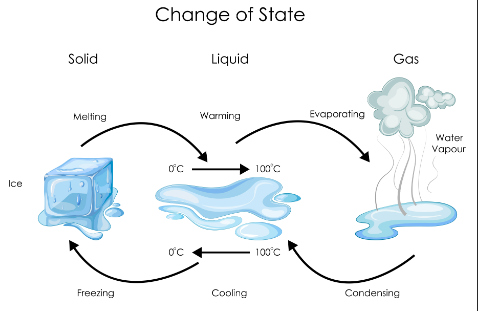
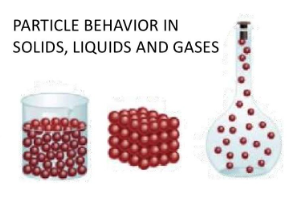
Imagine a world made up of tiny, invisible building blocks! These building blocks are called particles, and they shape everything around us.
- All Course Editors: Admin User
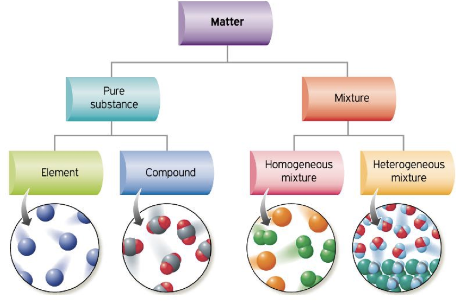
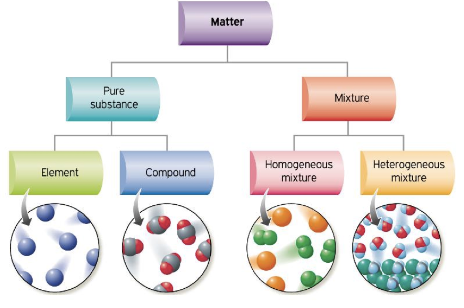
Mixtures are combinations of substances without chemical bonds. Solutions are homogeneous mixtures where one substance dissolves in another. Solubility is the maximum amount of solute that can dissolve in a solvent. Evaporation turns liquid into gas, leaving solute behind. Distillation boils and condenses a liquid mixture. Filtration separates solid particles from liquid or gas. Chromatography separates components based on their affinity for mobile and stationary phase.
- All Course Editors: Admin User
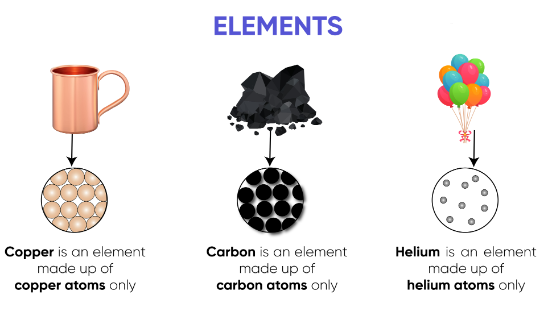
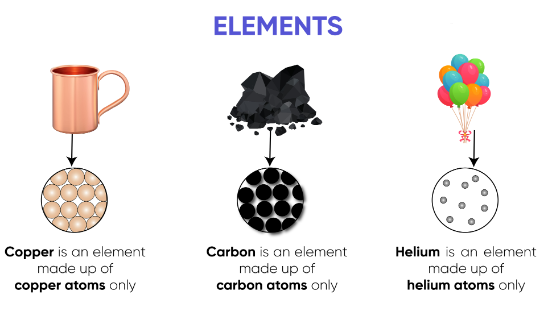
Elements are substances made of only one type of atom, such as oxygen or iron. Atoms are the smallest units of elements that retain their properties. Compounds are substances composed of two or more different elements chemically bonded together, like water (H2O) or carbon dioxide (CO2). Chemical formulas represent the composition of compounds using symbols and subscripts, indicating the ratio of atoms present, such as H2O for water.
- All Course Editors: Admin User
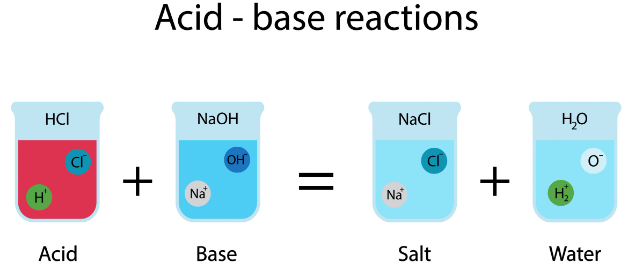
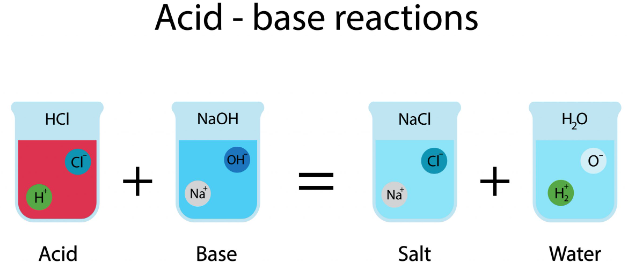
Neutralization is a reaction between an acid and a base to form water and a salt. Acids are substances that release hydrogen ions in solution, while alkalis release hydroxide ions. Making salts involves reacting an acid with a metal, metal oxide, or metal carbonate. Indicators are substances that change colour to indicate pH, a measure of acidity or alkalinity.
- All Course Editors: Admin User