
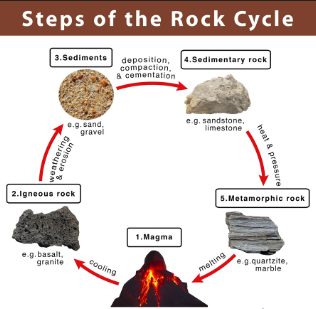
The Earth has an atmosphere composed of nitrogen and oxygen. Sedimentary rocks form from compressed sediment. Igneous rocks cool from molten magma, while metamorphic rocks form under heat and pressure. The rock cycle describes the continuous process of rock formation and transformation. The carbon cycle involves carbon movement between the atmosphere, oceans, biosphere, and geosphere. Climate change refers to long-term shifts in global climate patterns, often due to human activities. Recycling converts waste into reusable products to reduce resource consumption.
- All Course Editors: Admin User
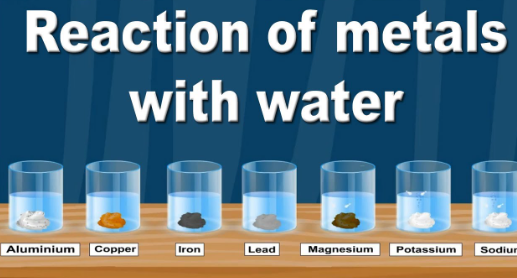
Metals react with water to form metal hydroxides and hydrogen gas. When metals react with oxygen, they form metal oxides. Metal displacement reactions occur when a more reactive metal displaces a less reactive metal from its compound. Ceramics are inorganic, non-metallic materials made by heating and cooling clay or other minerals. Extracting metals involves processes like electrolysis and reduction from ores. Acids react with metals to form salt and hydrogen gas. Polymers are large molecules made of repeating units called monomers, used in plastics and Fibers
- All Course Editors: Admin User
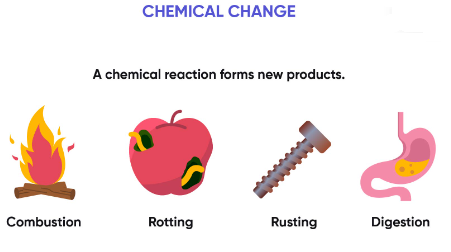
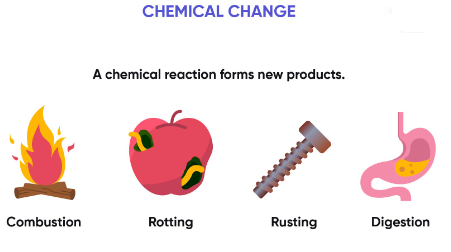
Chemical reactions transform substances. Thermal decomposition breaks compounds with heat. Conservation of mass says mass is conserved in reactions. Word equations describe reactions with words. Burning fuels release heat (exothermic). Endothermic reactions absorb heat.
- All Course Editors: Admin User
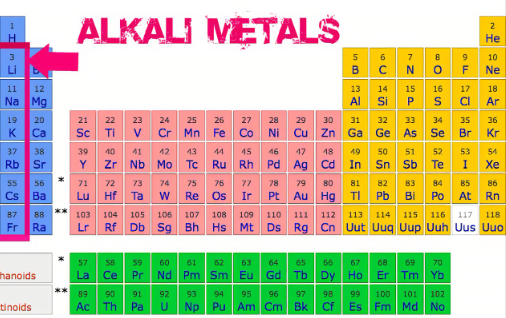
Metals are conductive and malleable, while non-metals are not. Group 1 elements are alkali metals like lithium and sodium. Group 7 elements are halogens like fluorine and chlorine. Groups are vertical columns with similar properties, while periods are horizontal rows indicating electron shells. Group 0 elements are noble gases, inert and stable
- All Course Editors: Admin User