
- All Course Editors: Admin User
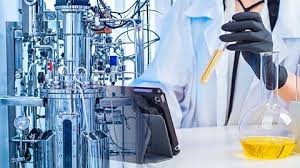
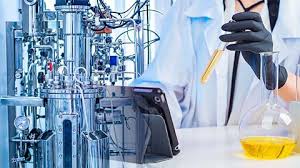
Separate chemistry refers to the study and practice of isolating specific chemical components from mixtures. This field focuses on the techniques and methodologies used to distinguish and extract individual substances from complex combinations of elements and compounds. Techniques like distillation, crystallization, chromatography, and filtration are essential in separate chemistry, allowing scientists to purify chemicals, identify unknown substances, and analyze the composition of mixtures. This discipline is crucial in various industries, including pharmaceuticals, environmental science, and food production, where the precise isolation of chemicals is necessary for research, quality control, and product development. By mastering the principles of separate chemistry, professionals can ensure the purity and efficacy of chemical substances, contributing to advancements in science and technology .
- All Course Editors: Admin User
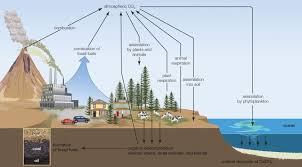
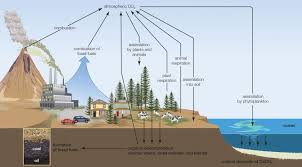
Fuels are substances that release energy when they undergo chemical reactions, often combustion. The primary types of fuels include fossil fuels such as coal, oil, and natural gas, as well as renewable alternatives like biofuels, hydrogen, and synthetic fuels. Fossil fuels have been the dominant energy source for centuries due to their high energy density and relative abundance. However, they are non-renewable and their combustion releases significant amounts of greenhouse gases, contributing to climate change. Renewable fuels, on the other hand, are derived from sustainable sources and produce fewer emissions, making them a key focus in the transition toward cleaner energy systems. The choice and use of fuels are critical to modern society, influencing everything from transportation and electricity generation to industrial processes and heating. .
- All Course Editors: Admin User
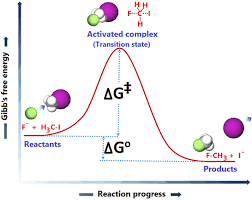
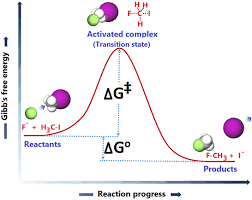
Chemical kinetics is the branch of chemistry that studies the rates at which chemical reactions occur and the factors that influence these rates. It explores how the speed of a reaction depends on variables such as temperature, concentration of reactants, and the presence of catalysts. The energy aspect of chemical kinetics is crucial, as reactions often require a certain amount of energy to proceed, known as the activation energy. This energy barrier must be overcome for reactants to transform into products. The energy profile of a reaction can be visualized as a curve, with the activation energy represented as a peak that the reactants must surpass. Catalysts play a significant role in chemical kinetics by lowering the activation energy, thereby increasing the reaction rate without being consumed in the process. Understanding these concepts is essential for controlling reaction conditions in industrial processes, developing new materials, and studying natural phenomena .
- All Course Editors: Admin User
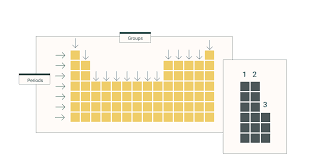
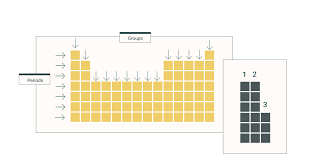
metals are highly reactive, soft metals. Halogens are reactive nonmetals forming salts with metals and acids with hydrogen. Noble gases are inert, colourless gases used in applications requiring non-reactivity, like lighting and filling balloons .
- All Course Editors: Admin User
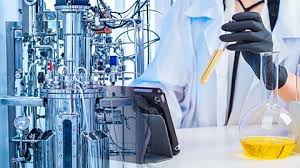

Separate chemistry refers to the study and practice of isolating specific chemical components from mixtures. This field focuses on the techniques and methodologies used to distinguish and extract individual substances from complex combinations of elements and compounds. Techniques like distillation, crystallization, chromatography, and filtration are essential in separate chemistry, allowing scientists to purify chemicals, identify unknown substances, and analyze the composition of mixtures. This discipline is crucial in various industries, including pharmaceuticals, environmental science, and food production, where the precise isolation of chemicals is necessary for research, quality control, and product development. By mastering the principles of separate chemistry, professionals can ensure the purity and efficacy of chemical substances, contributing to advancements in science and technology . .
- All Course Editors: Admin User
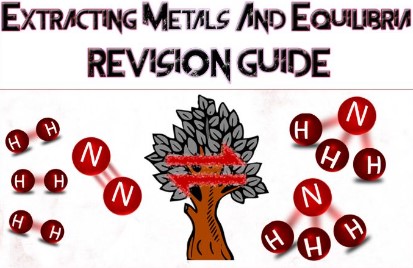
Metals are obtained and used based on their reactivity, shown in a reactivity series. Displacement reactions demonstrate how metals replace less reactive ones. Ores contain metals and are sources for extraction. Extraction methods vary based on reactivity; reactive metals are extracted through electrolysis, while less reactive ones through reduction with carbon or hydrogen. Alternatives like bioleaching or recycling are also used. Recycling reduces the need for extraction, conserving resources. Life-cycle assessment evaluates a product's environmental impact. .
- All Course Editors: Admin User
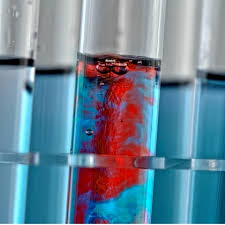
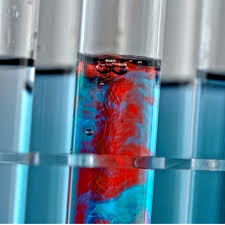
A chemical change is a process where one or more substances are transformed into entirely new substances with different chemical and physical properties. This transformation occurs at the molecular level, involving the breaking and forming of chemical bonds. Unlike physical changes, which only affect the form or state of a substance, chemical changes result in the creation of new chemical compounds. Common signs of a chemical change include color change, gas production, temperature change, light emission, and the formation of a precipitate. These changes are usually irreversible under normal conditions, meaning the original substances cannot be easily recovered. Examples of chemical changes include rusting of iron, combustion of gasoline, and the souring of milk .
- All Course Editors: Admin User
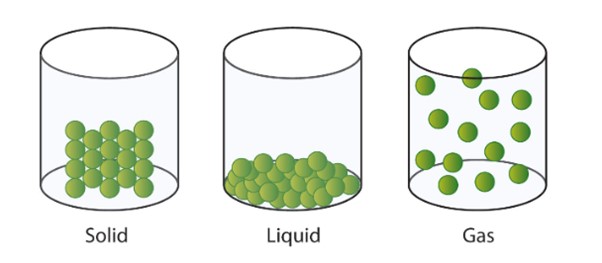
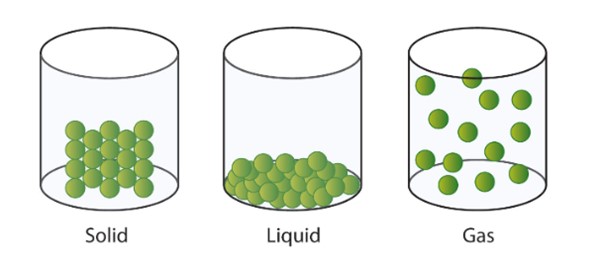
In solids, particles are tightly packed and vibrate in fixed positions. Liquids have particles that can move past each other, while gases have particles that move freely. Energy increases from solids to liquids to gases. Interconversion occurs through processes like melting, freezing, vaporization, condensation, sublimation, and deposition, involving changes in heat energy. .
- All Course Editors: Admin User
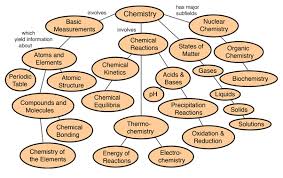
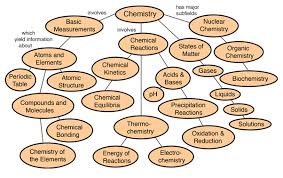
Key concepts in chemistry form the backbone of our understanding of matter and its interactions. Atoms, the fundamental building blocks of matter, combine to form molecules through various types of chemical bonds, such as ionic, covalent, and metallic. Chemical reactions, which involve the transformation of reactants into products, are governed by principles of stoichiometry, allowing for the calculation of quantities involved. Thermodynamics explores the energy changes during these reactions, while chemical equilibrium provides insight into the balance between reactants and products. Understanding acids and bases is crucial for grasping many reactions and their pH effects, while the periodic table organizes elements in a way that highlights their properties and trends. Kinetics examines the rates and mechanisms of reactions, and quantum chemistry delves into the behavior of electrons to explain molecular bonding and spectroscopy. Together, these concepts offer a comprehensive framework for analyzing and predicting chemical behaviour .
- All Course Editors: Admin User