
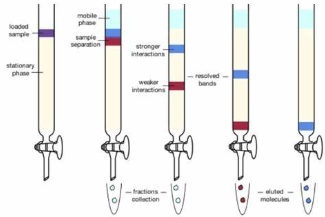
Chromatography is a technique used to separate components of a mixture based on their physical and chemical properties. It involves passing a mobile phase (liquid or gas) through a stationary phase (solid or liquid). Common types include TLC (Thin Layer Chromatography), GC (Gas Chromatography), and HPLC (High-Performance Liquid Chromatography).
- All Course Editors: Admin User
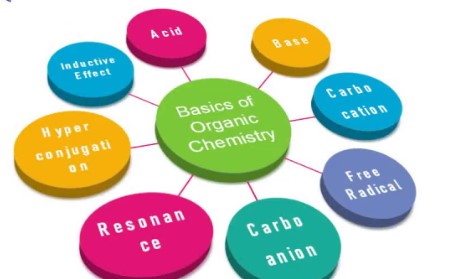
Welcome to organic chemistry basics! Compounds are named systematically based on their structure and functional groups. Fuels, including alkanes and alkenes, power our world. Alkanes have single bonds, while alkenes have double bonds, offering various applications. Alcohols, carboxylic acids, and polymers are other important organic compounds. Let us dive into the world of organic chemistry together! .
- All Course Editors: Admin User
Equilibrium is a state where opposing forces balance, resulting in a stable system. In chemistry, it occurs when the rates of forward and reverse reactions are equal. The equilibrium constant (K) characterizes this state. Factors like temperature, pressure, and concentration can affect equilibrium.
- All Course Editors: Admin User
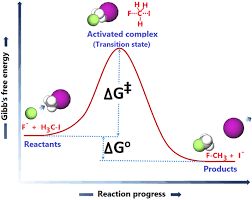
Chemical kinetics is the branch of chemistry that studies the rates at which chemical reactions occur and the factors that influence these rates. It explores how the speed of a reaction depends on variables such as temperature, concentration of reactants, and the presence of catalysts. The energy aspect of chemical kinetics is crucial, as reactions often require a certain amount of energy to proceed, known as the activation energy. This energy barrier must be overcome for reactants to transform into products. The energy profile of a reaction can be visualized as a curve, with the activation energy represented as a peak that the reactants must surpass. Catalysts play a significant role in chemical kinetics by lowering the activation energy, thereby increasing the reaction rate without being consumed in the process. Understanding these concepts is essential for controlling reaction conditions in industrial processes, developing new materials, and studying natural phenomena .
- All Course Editors: Admin User
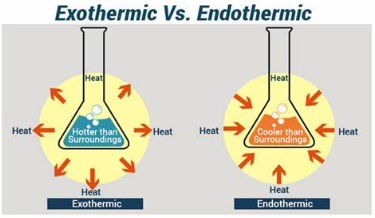
Exothermic reactions release heat, like burning wood. Endothermic reactions absorb heat, like ice melting. colour
- All Course Editors: Admin User
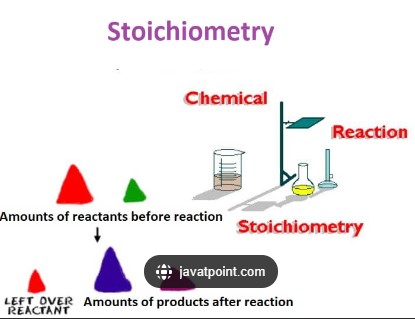
Welcome to the world of chemical calculations! Formulae represent the composition of compounds using symbols and subscripts. The relative masses of atoms and molecules are determined by comparing their masses to a standard, usually the carbon-12 isotope. The mole, a fundamental unit in chemistry, represents a specific number of particles—6.022 × 10^23, known as Avogadro's constant. This concept allows us to relate the mass of a substance to the number of particles it contains. Join us as we unravel the mysteries of chemical formulas, atomic masses, and the mole concept! .
- All Course Editors: Admin User
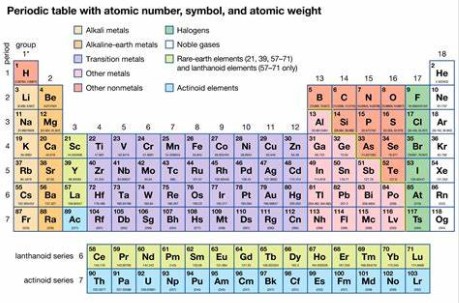
Welcome to the periodic table! Elements are organized by increasing atomic number. Group I include highly reactive alkali metals, while Group VII consists of reactive halogens. Transition elements exhibit variable oxidation states, and noble gases are inert. Let us explore these elemental groups together! .
- All Course Editors: Admin User
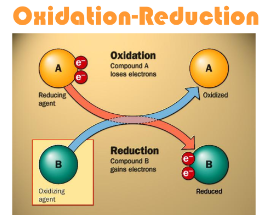
Oxidation is the loss of electrons, while reduction is the gain of electrons. These processes often occur together in chemical reactions known as redox reactions. Redox reactions are essential in various biological and industrial processes.
- All Course Editors: Admin User
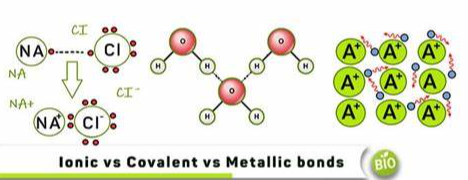
Chemical bonds hold atoms together in compounds. Ionic bonding involves electron transfer, forming ions and ionic compounds. Covalent bonding entails electron sharing, creating molecules. Metallic bonding occurs in metals, where electrons are delocalized among positive ions, contributing to their unique properties. Understanding these bonds is crucial for grasping the behaviour of different substances in chemistry.
- All Course Editors: Admin User
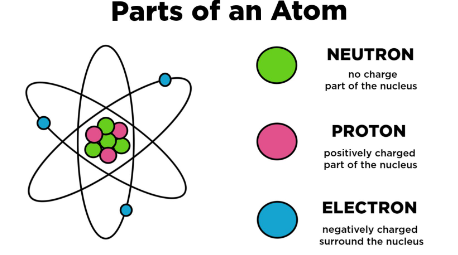
Atoms consist of protons (positive), neutrons (neutral), and electrons (negative). Protons and neutrons have a relative mass of 1, while electrons have negligible mass. The atomic number is the number of protons, and the mass number is protons plus neutrons. Isotopes are atoms of the same element with different numbers of neutrons. Relative atomic mass (Ar) is the average mass of isotopes, and relative isotopic mass is the mass of a specific isotope relative to carbon-12.
- All Course Editors: Admin User