
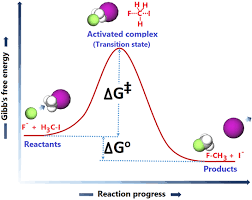
Chemical kinetics is the branch of chemistry that studies the rates at which chemical reactions occur and the factors that influence these rates. It explores how the speed of a reaction depends on variables such as temperature, concentration of reactants, and the presence of catalysts. The energy aspect of chemical kinetics is crucial, as reactions often require a certain amount of energy to proceed, known as the activation energy. This energy barrier must be overcome for reactants to transform into products. The energy profile of a reaction can be visualized as a curve, with the activation energy represented as a peak that the reactants must surpass. Catalysts play a significant role in chemical kinetics by lowering the activation energy, thereby increasing the reaction rate without being consumed in the process. Understanding these concepts is essential for controlling reaction conditions in industrial processes, developing new materials, and studying natural phenomena .
- All Course Editors: Admin User