
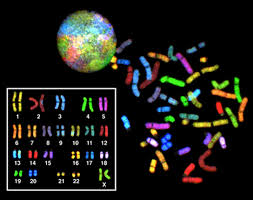
Chromosomes are thread-like structures made of DNA and proteins found in the nucleus of cells. They carry genetic information in the form of genes, which are specific sequences of DNA that code for proteins and determine an organism's traits. During cell division, chromosomes ensure that genetic information is accurately copied and distributed to new cells. In mitosis, a type of cell division for growth and repair, each daughter cell receives an identical set of chromosomes. In meiosis, which produces gametes for sexual reproduction, the chromosome number is halved, resulting in genetic diversity among offspring. This complex process is fundamental to heredity, evolution, and the continuity of life
- All Course Editors: Nazrin Kareem