
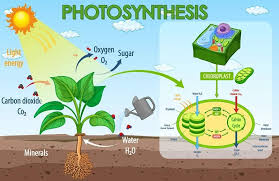
Plants are vital producers in ecosystems, creating their own food through photosynthesis. This process involves using sunlight, carbon dioxide, and water to produce glucose, a sugar that provides energy for growth, development, and reproduction. Additionally, plants convert glucose into starch for storage and other organic compounds like cellulose for building cell walls. Photosynthesis not only sustains the plant but also releases oxygen, which is essential for the survival of most other living organisms. Understanding how plants make and utilize food is crucial in studying the flow of energy in biological systems
- All Course Editors: Nazrin Kareem